
Vector
Chat on the well already open in your workspace. Sims and designs stay with the team.
See Vector先进的有杆泵设计。通过数字工具套件实现高效协作。PetroBench 以行业领先的精度和智能提供完整的全生命周期解决方案。
集成平台:
支持多区域、多团队的工程师并行工作
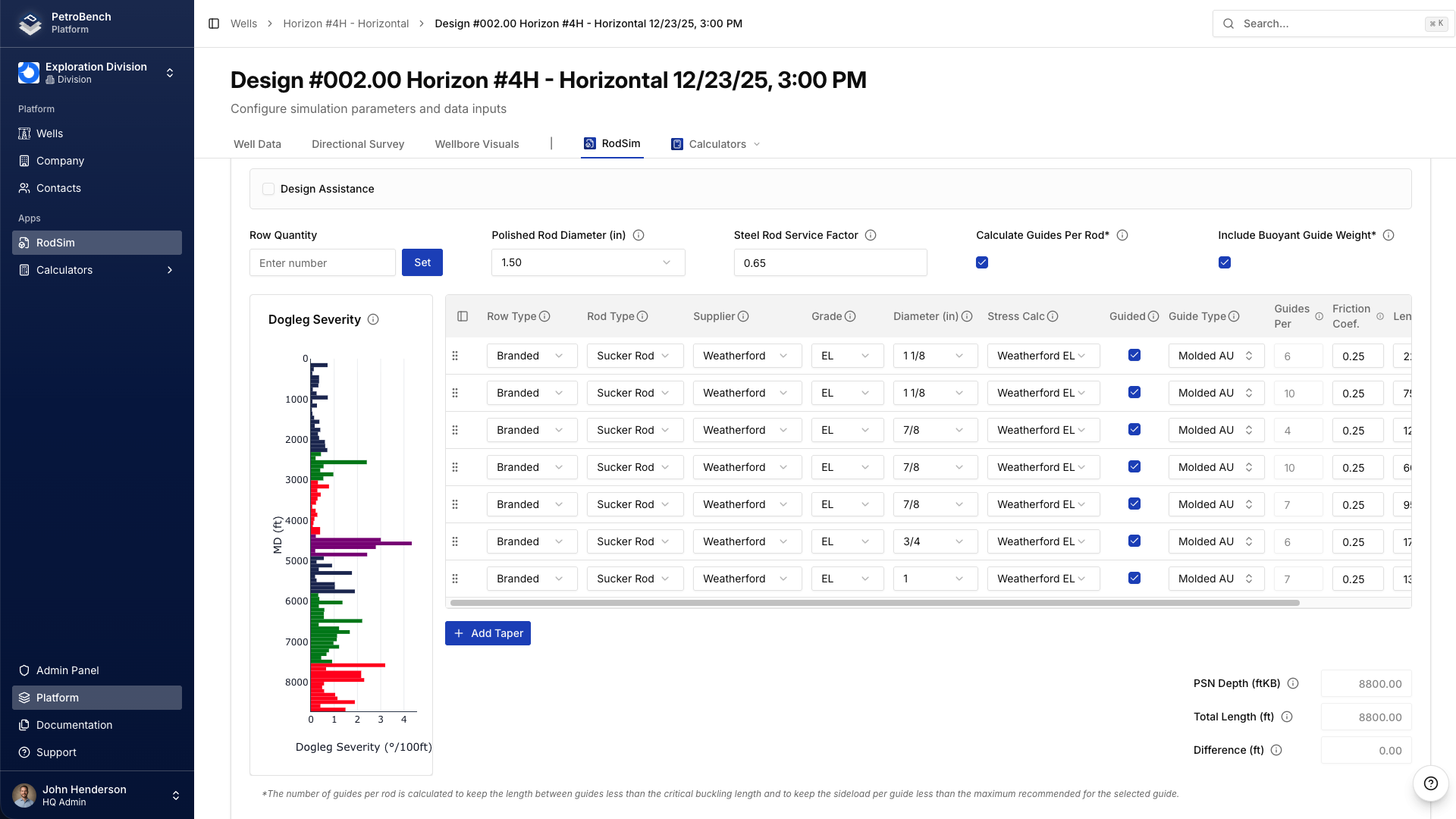
通过集成数据管理导入和分析井数据
三次样条插值确保精确的井筒表征和准确的结果
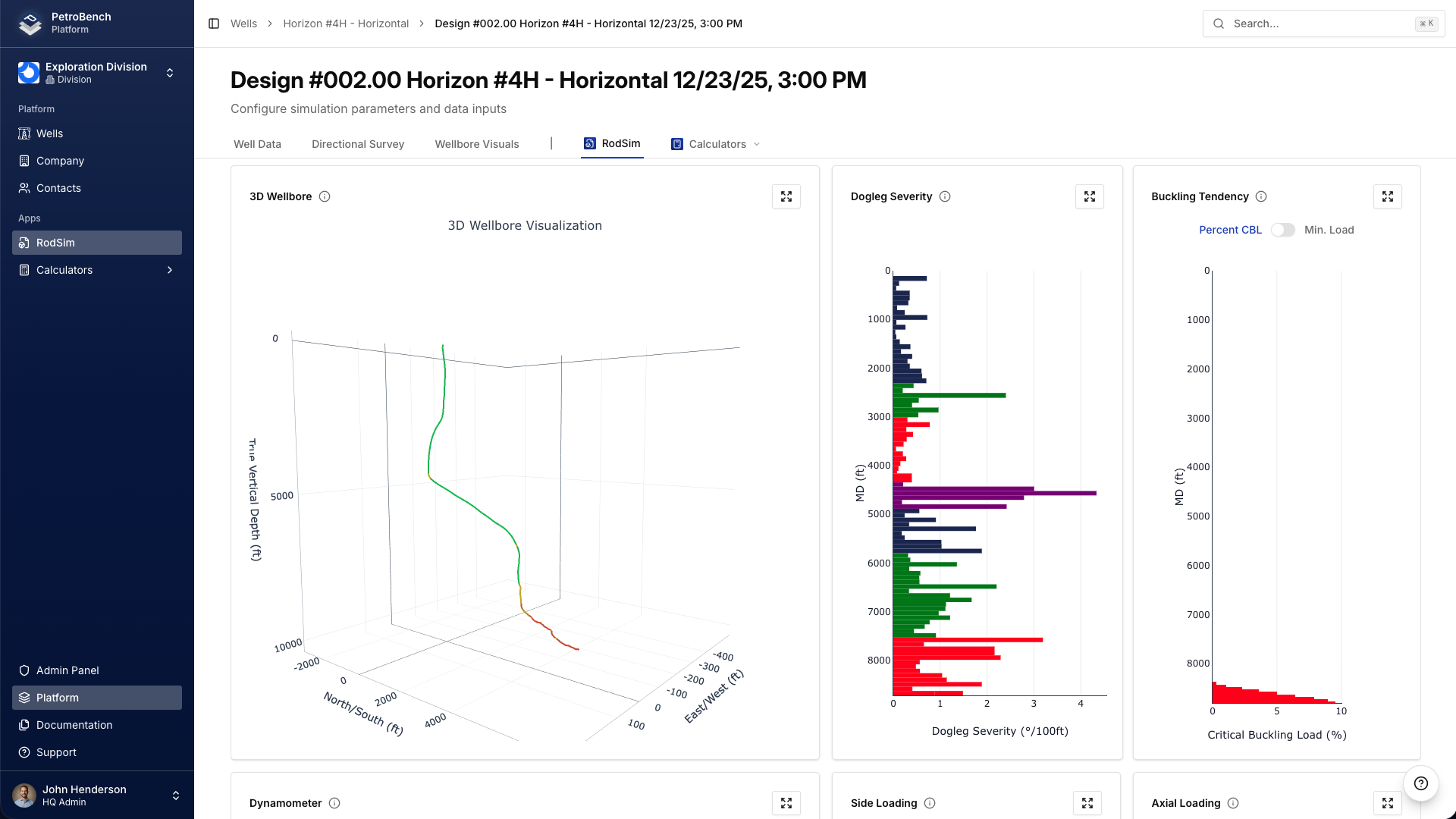
为企业级运营打造的高性能模拟
以行业领先的模拟精度设计优化有杆泵系统。在井的整个生命周期中监控和优化生产性能。
面向工程师、IT 主管、管理人员和管理员的云平台基础架构
统一井数据库与控制
基于角色的访问控制
企业设置与运营
连接企业系统
集中数据存储
单点登录集成
业务单元安全隔离
批量更新/导入/导出
合规与监控
业务流程自动化
实时警报和更新
井上下文讨论
Agents call the same RodSim engine your engineers already run. Vector stays on the open well, sims and reads through the engine, writes behind guardrails with a full audit trail.
Run a sim, draft a change, and keep the record on the well.
Ask Vector, or click Run in the workspace. Both hit the same RodSim engine on the well you have open.
Drafts sit behind write guardrails. Nothing hits the live well until an engineer signs off.
Inputs and outputs land on the well record. Open the run later and see what RodSim returned.
Chat in PetroBench, bring your AI tools, or connect company systems. Every path runs the same simulations.
Chat on the well already open in your workspace. Sims and designs stay with the team.
See VectorBring Claude, Cursor, or MCP clients to the same wells without leaving those tools.
See MCPPlug PetroBench into the systems your company already runs day to day.
See RESTEngineers design. Operations review. IT connects the stack. Same wells and permissions for all three.
Import wells, run RodSim, and compare designs. Every simulation stays versioned.
Dyno cards and designs on one well record. Vector can inspect; writes need engineer approval.
SSO with SAML or OIDC. Connect Snowflake, Databricks, Azure, AWS, or WellView. Audit log on every action.
将您的数据湖和遗留系统连接到 PetroBench,实现每次模拟中的实时数据。
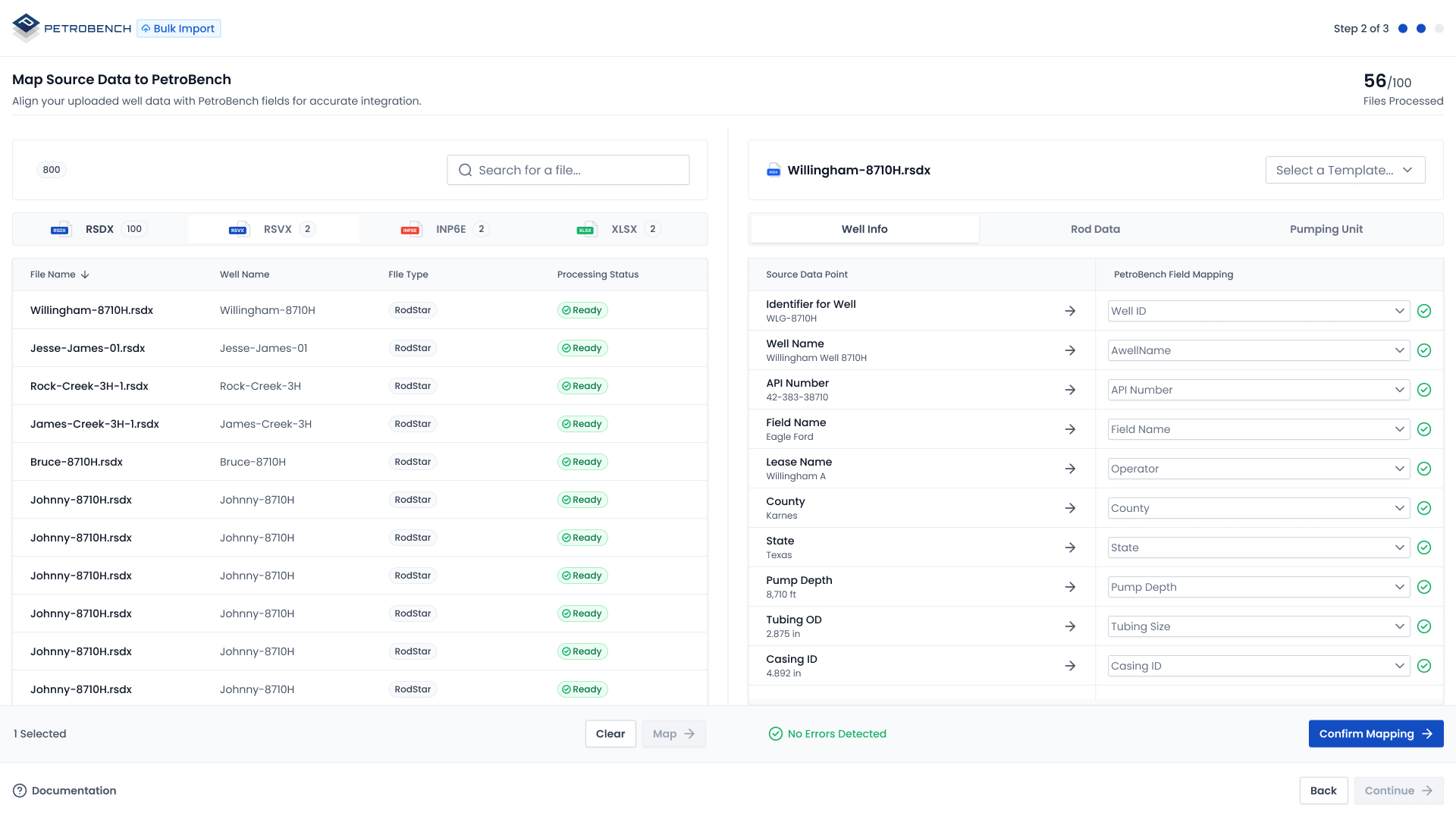
使用单次导入或批量导入模块,从遗留工具导入井文件和历史数据。
原生连接 Snowflake、Databricks、Azure、AWS 和 WellView,与您的现有基础设施无缝数据同步。

Answers before you book a walkthrough.
Yes. RodSim runs in the shared workspace, not on one laptop. The same well opens the same way for every engineer on the team.
Yes. Run the same wells in PetroBench next to your current desktop tool. Engineers compare numbers on wells they already know before the team moves the well of record into the workspace.
Yes. Bulk import brings in the common legacy formats so well files and rod strings come across without rebuilding.
Yes. Native connectors pull wells, surveys, and production data into PetroBench. File import stays available when a connector is not the path.
Designs live on the well. Anyone with access opens that well and sees the same runs and the recommended design.
Compare up to five designs side by side on the well. Pick the base case from that view. That recommended design stays on the well for the team.
Access follows your org tree and roles. An engineer opens the wells their region and permissions already allow. The workspace does not widen that view.
Most teams import a set of wells they already know, run those in the workspace, compare side by side with their current tool, then widen regions once the team is comfortable.
Yes. Headquarters publishes equipment libraries and templates. Divisions and regions inherit those so every engineer designs against the same catalog.
On the well. Operations opens that well and sees the base case. The next engineer on that well starts from that version.